How Many Rest Days Between Muscle Grouos Again

Post-Conditioning Recovery | Rest Between Workouts | Active Recovery | Rest Betwixt Sets
I've trained and pushed myself hard over the years, and I've written programs for thousands of clients. If I've learned one thing, it'southward this: Information technology's non how hard y'all tin can exercise, but what yous can recover from that matters.
What Is Recovery and How Do You Monitor Information technology?
Recovery is not just most functioning in the moment; information technology'due south too your body'due south ability to overcome and arrange to stress after exercise or competition.
Lifting weights at the gym stresses your body, which and then responds via various mechanisms to restore your torso to its preferred "balanced" state. This means you lot can't merely think most recovery at the muscular level, y'all take to consider what do does to the entire torso.
Your Muscle-Building System
Muscles need electrical impulses to drive wrinkle, relying on the nervous organization to fire. The nervous system—namely, the autonomic nervous system, or ANS—consists of two branches:
- Sympathetic nervous arrangement, or SNS, is the "fight or flight" branch. If you desire to run fast, jump high, or lift heavy, you activate your SNS to help you practice it.
- Parasympathetic nervous organisation, or PNS, is the "rest and digest" branch. If you want to chill out, relax, and recover, you demand to activate the PNS.
When yous want to train difficult, you need to be able to creepo up your SNS and push button weight. But when it's time to relax and recover with deep, restful sleep, y'all demand your PNS working at a high level.
Don't allow stress throw off your gains. Find the right products to help yous get to sleep faster, stay comatose longer, and combat stress.*
VIEW ALL
You must guess the total stress of each workout so you can balance your ANS—and your recovery—appropriately.
Track How Each Conditioning Feels
I method you can use is rate of perceived exertion, or RPE. The RPE gives you insight into not only how you're feeling that mean solar day but also how you're recovering from your sessions on average.
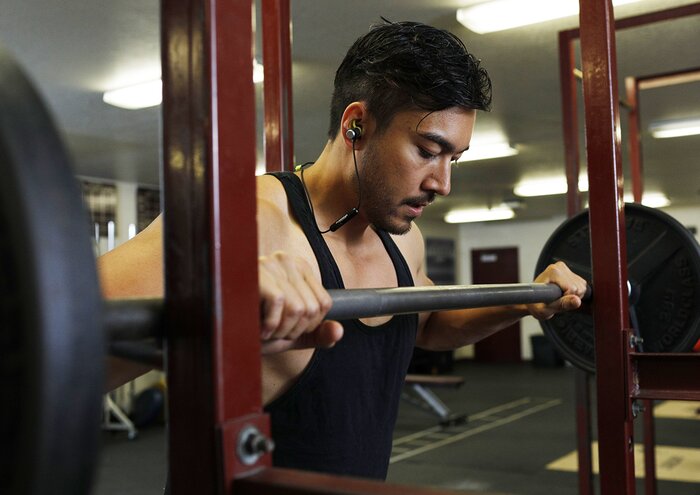
Use a i-10 scale to rate how hard a session is, with 10 being a grueling workout, 9 existence a really tough workout, 8 being a challenging conditioning, and and so on. While information technology'due south not perfect, this helps you assess how you feel on any given twenty-four hour period, regardless of how much weight you're lifting, and whether or not you need more time off between workouts.
Calculate More Than But Book
Another way to gauge how hard you trained is to actually calculate the total stress of the workout. Almost people are familiar with total volume (sets x reps), only a critical slice of the puzzle is the load, which dictates the intensity. Instead of sets ten reps, the new formula is:
- sets 10 reps x load
Using this equation, hither'south how two different workouts done with the 5x5 scheme would look:
- 5 sets x v reps ten 200 pounds = v,000 pounds full workload
- 5 sets x v reps 10 400 pounds = x,000 pounds total workload
While each workout contains identical volume (25 reps), adding in the load gives you lot a much amend measure of how challenging the workout actually is. Note that as lifters mature—either in age or in feel—they usually observe that they need more intensity to strength the body to adapt.
Other Factors That Affect Recovery
As we historic period, stress takes a bigger toll, and we don't recover as fast as nosotros one time did. A xx-twelvemonth-one-time who only worries nigh going to class, getting to the gym v times per week, and recovering from extracurricular activities can accept a lot of stress. By contrast, a l-year-old with teenage children at dwelling house, a full-time job, and money issues volition need more recovery time.
Here are three major factors to consider when designing a weekly schedule:
- Age and recovery ability.
- Primary training goal (e.g., strength focused vs. physique focused).
- Other stressors in life.
For most lifters, 2-iv sessions per week works well. Younger lifters can usually handle more workouts, while older lifters should stick with fewer.
Become healthy muscle recovery afterwards every workout and then you can get back to the gym and keep making gains.
VIEW ALL
Building a Better Recovery Template
Once you accept an idea of how difficult a given grooming session is and how many sessions you programme to complete per week, you lot can finally plan recovery time between workouts.
When y'all're young, it'southward easier to go back-to-dorsum days. As y'all age, you volition typically demand more time off between sessions. Yes, there are exceptions, and some people can train every mean solar day. By and large, however, virtually people who train hard 3-4 times per calendar week do better taking a day off betwixt workouts.
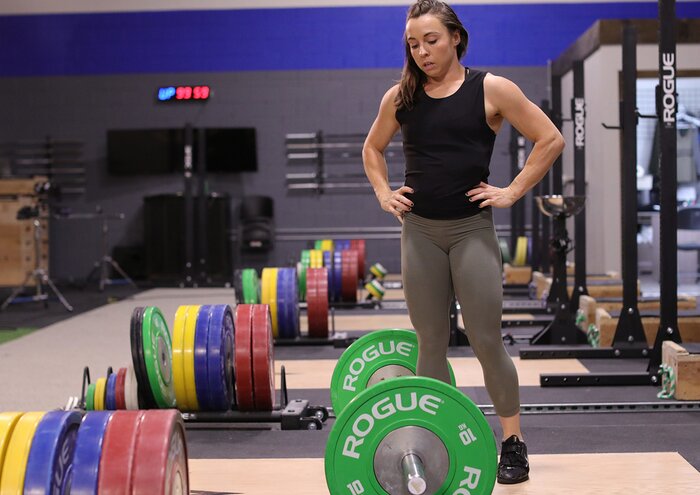
Strength-Focused Recovery
If you're edifice strength, you lot can probably simply do max attempt workouts twice per week. Working at that intensity means you lot'll need 48-72 hours between sessions to recover. Call back, even if your muscles feel gear up, your nervous system needs a break, too.
Having only ii loftier-intensity days doesn't hateful you have to accept the rest of the week off, though. Whether it's less-intense, volume-focused workouts, recovery workouts, or some other plan, there are still options to get into the gym while you lot recover.
Physique-Focused Recovery
If you lot're more focused on physique, follow a traditional bodybuilding-style split where you'll hitting maximal intensity on leg day and potentially on your back or chest day. Give yourself a mean solar day off later on those heavy workouts to ensure that you maximize your power to recover.
Whichever goal you choose, find a training approach that lets you train hard while still maximizing recovery.

Source: https://www.bodybuilding.com/content/the-science-of-muscle-recovery-how-long-should-you-rest-between-workouts.html
0 Response to "How Many Rest Days Between Muscle Grouos Again"
Post a Comment