Is Mutton and Beef the Same
 by Victoria Mazmanyan | Last updated on October 14, 2021
Education: General Medicine at YSMU

vs

Summary
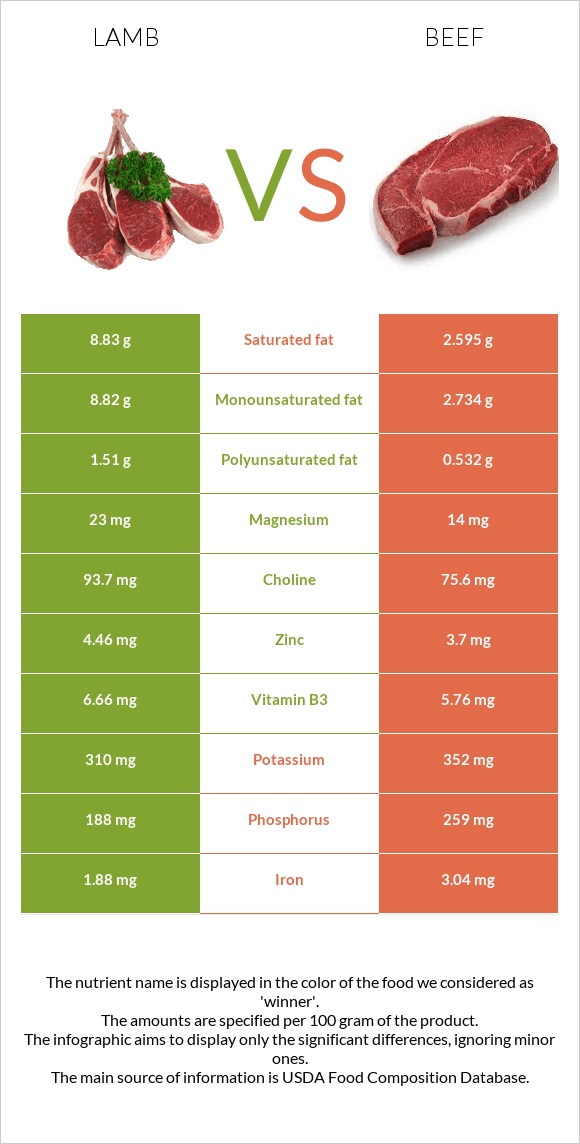
Lamb is higher in calories, fats, including saturated, polyunsaturated fat and cholesterol, essential amino acids, and most vitamins. At the same time, beef is richer in poly peptide due to more than non-essential amino acids, iron, zinc, and vitamin B6.
Table of contents
- Introduction
- Nomenclature
- Appearance
- Taste and Apply
- Toll
- Varieties
- Nutrition
- Macronutrients and Calories
- Calories
- Protein
- Fats and Cholesterol
- Carbohydrates
- Vitamins
- Minerals
- Glycemic Index
- Acerbity
- Weight Loss & Diets
- Health Impact
- Health Benefits
- Cardiovascular Health
- Diabetes
- Downsides and Risks
- Cardiovascular Health
- Diabetes
- Cancer
- Bans and Religion
- Impact on the Environment
- References
Introduction
People oft choose meat based on its subjective qualities, such as taste and texture. Notwithstanding, different types of meat can vary with their nutrition and their impact on health. In this commodity, we will discuss the differences and similarities between lamb or mutton and beef based on scientifically proven information.
Nomenclature
The main deviation between lamb or mutton and beef is naturally the animate being they come up from.
Lamb, mutton, and hogget are all names for domestic sheep meat. However, these terms are not interchangeable. Mutton or hogget is the meat of fully grown sheep, ordinarily two and 3 years of age, respectively, while lamb is the meat of a sheep younger than the age of one.
Beefiness is the meat of older cattle: domesticated cows or bulls. The meat of immature cattle is called veal. To encounter a consummate comparison of veal and lamb or mutton, you tin visit this page.
Lamb and beef are both classified as red meat. Compared to white meat, cherry meat is darker in color and richer in myoglobin, and therefore heme iron.
Appearance
Lamb and beef meat can be very hard to tell apart based on appearance alone. Beefiness and lamb are dark in color, both being types of red meat. However, when comparing the two, beef can appear to be darker due to a higher atomic number 26 and myoglobin content.
Both beef and lamb have white stripes of intermuscular fatty called marbling. The amount of marbling in the meat depends on the cut.
Taste and Apply
Mutton and beefiness are similar in taste. This taste of red meat is described as umami. Depending on the fat content, it can also be buttery and soft or dry and firm.
Compared to mutton and beef, lamb is said to have a more tender texture and a more frail flavor.
Beef is used in cultures all over the world, while lamb and mutton are more common in Mediterranean and Middle Eastern cuisine.
Beef and lamb are oftentimes used in their ground form, especially in burgers. Beef burgers are a lot more popular than lamb burgers.
Price
On average, in the US market, beef tends to be a little cheaper past near 0.iii$.
Varieties
The nutritional and culinary qualities of meat can differ based on the type of meat. Meat can exist classified based on the cutting or how the animal was raised.
Cuts of beefiness include the chuck (shoulder), the brisket and shank (chest), the rib, the sirloin (hip), the brusk loin, the short plate, the scrap, and the round.
Similarly, depending on the cut, yous can observe the following varieties of lamb or mutton: the square cut shoulder, the rack or rib, the loin, the leg, the neck, the breast, the shanks, and the flank.
How the animal has been raised as well has a role in the characteristics of the meat. Depending on the conditions in which the cows have been kept, beef can be formula-fed, also known as milk-fed or white, non-formula fed, also known every bit ruby, pasture-raised, or gratuitous-raised. Beef can also be grass-fed or organic.
All reddish meat can exist candy or unprocessed. Meat undergoes processing to extend its shelf life, equally well as to improve its sense of taste, colour, and appearance. These processing methods include curing, smoking, salting, drying, or adding preservatives and colorings. Some examples of processed red meat are ham, sausages, salami, and pepperoni.
Diet
The nutrition of meat profoundly varies depending on the cutting and fat content.
The nutritional values below are presented for cooked domestic lamb, a composite of trimmed retail cuts, trimmed to ¼ inch fat, and broiled ground beef with xv% fatty and 85% lean meat.
Macronutrients and Calories
Overall, lamb is denser in nutrients, every bit it contains simply around 54% water and 46% nutrients, while beef consists of 58% h2o.
As with most meat, the average serving size for both lamb and beef is 3oz, equal to 85g.
Calories
Lamb and beef are both high-calorie foods. Nonetheless, lamb provides more energy between the two, containing 294 calories per 100g serving, while the same serving size of beefiness has 250 calories.
Nevertheless, the calorie content of meat tin can significantly alter with a different cut or cooking method. When comparing only lean cuts of roasted beef tenderloin or loin with a completely lean cutting of fast fried lamb tenderloin, nosotros discover that the lamb tin exist slightly lower in calories. Lean lamb tenderloin contains 155 calories, while lean beef tenderloin provides 168 calories (1, 2).
Poly peptide
While beingness less dense in nutrients, beef is all the same richer in poly peptide. A 100g serving of beef provides 25.93g of protein. At the same fourth dimension, the same serving size of lamb contains 24.52g of protein.
Despite being lower in protein overall, lamb is richer in all of the essential amino acids. Therefore, the protein institute in lamb is of higher quality.
Lamb is particularly richer in tryptophan, containing over three times more than than beef.
Of the non-essential amino acids, lamb is also richer in aspartic and glutamic acids.
Fats and Cholesterol
Between these two cuts of meat, lamb is notably richer in fats. The same 100g serving size of cooked lamb contains nigh 21g of fats, while cooked beef provides fifteen.4g of fats.
Naturally, lamb is college in all types of fat: saturated, monounsaturated, and polyunsaturated. Withal, while lamb meat is simply i.5 times higher in saturated fat than beef, it is over 3 times richer in polyunsaturated fatty acids.
Overall the fat acrid composition in beef is equally follows: 45% saturated fats, 51% monounsaturated fats, and four% polyunsaturated fats. Lamb, on the other hand, consists of 46% saturated fats, 46% monounsaturated fats, and eight% polyunsaturated fats.
Unsurprisingly, lamb is also slightly higher in cholesterol. The same 100g serving size of lamb contains 97mg of cholesterol, while beef contains 88mg.
Carbohydrates
Like most meat, both beef and lamb contain no notable amount of carbohydrates.
Vitamins
Overall, lamb and mutton tend to be more abundant in vitamins. Lamb and mutton contain 2 times more folate, vitamin B1, and virtually 4 times more vitamin K. Lamb or mutton is also richer in vitamin B2, vitamin B3, and vitamin E.
Beef, on the other hand, provides three times more than vitamin B6.
Lamb or mutton contains vitamin D, which beef lacks completely. At the aforementioned time, vitamin A can be plant in beef just non in lamb.
The two types of meat are almost equal in the contained amounts of vitamin B12 and vitamin B5, with beef being only a fiddling richer in vitamin B12.
Lamb, mutton, and beef are all absent in vitamin C.
Vitamin Comparison
Vitamin comparison score is based on the number of vitamins by which one or the other food is richer. The "coverage" chart below testify how much of the daily needs can be covered by 300 grams of the food
eight
:
iii
Contains more Vitamin E +xvi.7%
Contains more Vitamin D +∞%
Contains more Vitamin B1 +117.4%
Contains more Vitamin B2 +42%
Contains more Vitamin B3 +23.8%
Contains more Folate +100%
Contains more Vitamin 1000 +283.three%
Contains more than Vitamin A +∞%
Contains more than Vitamin B6 +193.8%
Equal in Vitamin B5 - 0.658
Equal in Vitamin B12 - 2.64
Contains more Vitamin E +sixteen.seven%
Contains more Vitamin D +∞%
Contains more Vitamin B1 +117.iv%
Contains more Vitamin B2 +42%
Contains more Vitamin B3 +23.8%
Contains more Folate +100%
Contains more Vitamin K +283.3%
Contains more Vitamin A +∞%
Contains more Vitamin B6 +193.8%
Equal in Vitamin B5 - 0.658
Equal in Vitamin B12 - 2.64
Minerals
Meat can be an important source of nearly all the minerals needed in a diet. While beefiness and lamb are not cardinally dissimilar in their mineral compositions, in that location are some differences.
Beef is a improve source of atomic number 26 and zinc. Beef is also slightly higher in potassium, phosphorus, and calcium.
On the other manus, lamb contains 1.4 times more copper, besides equally relatively college levels of selenium, magnesium, manganese, and choline.
Lamb and beef incorporate equal amounts of sodium.
Mineral Comparison
Mineral comparison score is based on the number of minerals past which one or the other food is richer. The "coverage" nautical chart beneath show how much of the daily needs can be covered by 300 grams of the food
2
:
5
Contains more than Copper +40%
Contains more Iron +38.three%
Contains more Zinc +41.v%
Equal in Calcium - 18
Equal in Magnesium - 21
Equal in Phosphorus - 198
Equal in Potassium - 318
Equal in Sodium - 72
Contains more Copper +40%
Contains more Iron +38.three%
Contains more Zinc +41.5%
Equal in Calcium - xviii
Equal in Magnesium - 21
Equal in Phosphorus - 198
Equal in Potassium - 318
Equal in Sodium - 72
Glycemic Index
The glycemic index of both lamb and beef is considered to be 0 due to the absence of carbohydrates. You can learn more than nigh the glycemic index of foods with low or no carbohydrates.
Acidity
The pH of meat changes depending on its freshness and the conditions in which information technology has been kept.
The acceptable range of the pH value for beefiness falls between 5.3 to 5.7. As the pH value of beef reaches 6.v, it starts to decompose (iii). This means that beef has an acidic pH value.
The pH value of lamb can vary between v.seven to 6.05 (4). Apparently, the pH of lamb tends to be more acidic than that of beef.
Another style of measuring the acidity of a certain nutrient is past looking at its potential renal acrid load or PRAL value, which shows how much acid or base it produces.
The PRAL values of lamb and beef are 11.half dozen and 12.half-dozen, respectively. This demonstrates how beefiness is slightly more than acrid-producing inside the organism.
Weight Loss & Diets
Lamb, mutton, and beef are all high-calorie foods. However, this does not necessarily exclude these foods from weight loss diets, every bit they are loftier in protein simply very low in carbohydrates.
Between these two types of meat, beef is the better choice for low-calorie and low-fat diets. Both lamb and beef fit well into low carb and depression glycemic alphabetize diets.
Research has found a correlation between high meat intake and increased run a risk of weight gain and obesity (5, 6). However, this take a chance is higher with processed and fatty meats, as opposed to unprocessed and lean meats (7).
Red meat, including both lamb and beef, is a major function of the keto and Atkins diets.
A Paleo diet allows the consumption of unprocessed lamb, mutton, and beef, simply not processed meat.
Consumption of lamb and beef within limits can too be a part of a Mediterranean diet.
Health Impact
Red meat and its effects on wellness take been at the center of attention for many researchers for several decades. However, while some things are certain, science is withal inconclusive about other areas. In this section, we will discuss the most pop studies examining red meat, including lamb and beef, and its impact on wellness.
Health Benefits
Overall, lean and unprocessed meat has a more beneficial impact on health than fatty and processed meats. While lamb and beef accept like fat compositions, lamb tends to have a more favorable fat profile between the two.
Cardiovascular Health
A healthy diet, depression in saturated fats and high in lean beef, has been researched to lead to favorable effects on cardiovascular disease due to decreased levels of total cholesterol and low-density lipoproteins (8).
A diet low in calories but loftier in poly peptide from lean red meat can also meliorate risk markers of cardiovascular disease and type 2 diabetes (9).
South African lamb, in particular, has been studied to be a good source of poly peptide, with its moderate intake potentially decreasing levels of homocysteine in the claret (ten).
Diabetes
Equally mentioned above, a low-calorie diet high in lean red meat may take a benign consequence on the risk markers of blazon 2 diabetes mellitus (9).
Downsides and Risks
The possible mechanisms of action for the adverse furnishings of scarlet meat include inflammation, oxidative stress, and negative effects on the liver, pancreas, and fat cells due to high levels of heme atomic number 26, saturated fats, branched amino acids, and other compounds. (xi).
Unlike unprocessed red meat, processed red meat undergoes various treatments to extend its shelf life. Processed cherry-red meat may incorporate college levels of sodium and nitrates, as well as additives and contaminants. These contaminants can have diverse harmful effects on health (eleven).
Cardiovascular Health
Various studies have shown a correlation between the consumption of both processed and unprocessed cherry-red meat and an increased risk of stroke, coronary eye disease, and potentially even middle failure (xi).
Due to the heme iron content, high consumption of carmine meat has also been associated with college blood force per unit area (12).
Diabetes
A considerable number of studies accept consistently shown that a diet rich in red, and especially processed, meat is associated with an increased take chances of type two diabetes mellitus.
The risk of type 2 diabetes can increase depending on the training method of the meat. Enquiry suggests that certain grooming methods, in particular the use of high estrus cooking methods, such as broiling, barbecuing, or grilling and roasting, increase the take a chance of type 2 diabetes (thirteen).
Cancer
The do of cooking meat at high temperatures, such every bit pan-frying and barbecuing, may lead to the product of heterocyclic amines, which are idea to increment cancer adventure in humans (11).
Grilled or barbecued meats may as well comprise high levels of polycyclic effluvious hydrocarbons, which promote the development of cancer and DNA damage (14).
Research has found that a high intake of both processed and unprocessed red meat may increase the gamble of esophageal, colorectal, pancreatic, and liver cancers (11).
Bans and Religion
Beef is considered to be a respected creature of God in Hinduism. Due to this reason, there are laws in Bharat prohibiting the slaughtering of cows which vary past state. Slaughtering a cow in India is punishable by law, with a jail judgement from 6 months up to x years, depending on the state.
Consumption of sheep meat is not prohibited in any major religion of the globe.
Impact on the Surround
Over the terminal few decades, public concern has grown over the affect of mass blood-red meat production on the environment and climatic change. Red meat product leads to large amounts of greenhouse gas emissions, fossil energy, and water use, among other things.
The production of lamb has a larger impact on greenhouse gas emissions when compared to beefiness product.
The greenhouse gas emission, expressed as CO2 equivalents, for the production of 1kg of lamb is l, while the aforementioned number for beef is 30 (fifteen).
References
- https://fdc.nal.usda.gov/fdc-app.html#/food-details/172622/nutrients
- https://fdc.nal.usda.gov/fdc-app.html#/nutrient-details/746758/nutrients
- The issue of pH on beefiness eating quality
- pH values of the fresh unlike meat types during chilled storage at 2 • C
- https://world wide web.ncbi.nlm.nih.gov/pmc/articles/PMC2697260/
- https://bmcnutr.biomedcentral.com/articles/10.1186/s40795-016-0063-9
- https://academic.oup.com/ajcn/commodity/108/one/33/5036105
- https://www.ncbi.nlm.nih.gov/pmc/manufactures/PMC3238465/
- https://pubmed.ncbi.nlm.nih.gov/31771921/
- https://www.ncbi.nlm.nih.gov/pmc/articles/PMC4213744/
- https://onlinelibrary.wiley.com/doi/x.1111/joim.12543
- https://www.bmj.com/content/337/bmj.a258
- How Meat Is Cooked May Bear on Risk of Type 2 Diabetes
- https://world wide web.efsa.europa.eu/en/efsajournal/pub/235
- https://pubmed.ncbi.nlm.nih.gov/22964113/

Education: Full general Medicine at YSMU
Last updated: October fourteen, 2021
Infographic
Which food is preferable for your diet?

is amend in instance of low nutrition
| | | |
| Depression Fats diet | | |
| Low Carbs diet | Equal | |
| Low Calories diet | | |
| Low glycemic index diet | Equal | |
People too compare
Vitamin and Mineral Summary Scores
The summary score is calculated past summing up the daily values contained in 300 grams of the product. Evidently the more the food fulfills human daily needs, the more the summary score is.
Vitamin Summary Score
52
52
Mineral Summary Score
46
55
Macronutrients Comparison
Macronutrient comparison charts compare the corporeality of protein, full fats, and total carbohydrates in 300 grams of the food. The displayed values show how much of the daily needs can be covered by 300 grams of food.
Poly peptide
147%
156%
Carbohydrates
0%
0%
Fats
97%
71%
Comparison summary
Which nutrient is richer in vitamins?
Lamb and mutton is relatively richer in vitamins
Which food is lower in Cholesterol?
Beef is lower in Cholesterol (deviation - 9mg)
Which food is lower in Saturated Fat?
Beef is lower in Saturated Fat (departure - 2.935g)
Which nutrient is cheaper?
Beef is cheaper (divergence - $0.3)
Which food is richer in minerals?
Beef is relatively richer in minerals
Which nutrient contains less Saccharide?
?
The foods are relatively equal in Sugar (0 k)
Which food contains less Sodium?
?
The foods are relatively equal in Sodium (72 mg)
Which food is lower in glycemic index?
?
The foods take equal glycemic indexes (0)
Source: https://foodstruct.com/compare/lamb-vs-beef
0 Response to "Is Mutton and Beef the Same"
Post a Comment